Posts

Showing posts from September, 2017

Agile Methodologies

Image
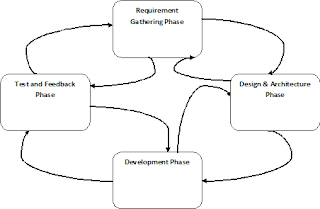
In this section we will discuss the method of overcoming the preceding risk factors which are nothing but Agile Methodologies. Agile Methods The most recent group of methodologies built on an iterative model are known as Agile Methods.  This method mainly minimizes risk of the developer's focus on the smaller deliverable units. Each development cycle will be very smaller and at the end of each cycle the entire team evaluates the project priorities. The above picture states that Agile method is based on the Iterative Model where the various phases like Requirement gathering, Architecture & Design and all the phases evolve through collaboration between self organized cross functional teams. Agile Process Short Iterations Continuous testing Self organizing teams Constant collaboration Frequent  replanning based on the customers feedback Agile Merits Customer satisfaction by frequent delivery of the products Requirement changes are always welcome All the...

Agile methods

Image
Plan-pushed improvement strategies had been nearly the simplest opportunity for businesses until the Nineteen Nineties. Royce introduced a version that became referred to as the waterfall version in the Seventies. It has usually been considered that the supplied single-pass waterfall cycle is an exemplary development model when, in truth, Royce used it as a simplified instance earlier than proceeding to iterative models that he actually desired. The foundation of agile methods is in the iterative and incremental development. Agile methods have gained increasing popularity since the 1990s when the agile movement begun and several software production processes evolved such as the well-known Extreme Programming (XP) and Scrum methods. The teams are commonly small, self-organizing and co-located, working closely together that helps in producing a high-quality software. Frequent feedback from closely collaborating customers is also promoted as a means of fulfilling customer needs. ...