Agile methods
Plan-pushed improvement strategies had been nearly the simplest opportunity for businesses until the Nineteen Nineties. Royce introduced a version that became referred to as the waterfall version in the Seventies. It has usually been considered that the supplied single-pass waterfall cycle is an exemplary development model when, in truth, Royce used it as a simplified instance earlier than proceeding to iterative models that he actually desired.
The foundation of agile methods is in the iterative and incremental development. Agile methods have gained increasing popularity since the 1990s when the agile movement begun and several software production processes evolved such as the well-known Extreme Programming (XP) and Scrum methods. The teams are commonly small, self-organizing and co-located, working closely together that helps in producing a high-quality software. Frequent feedback from closely collaborating customers is also promoted as a means of fulfilling customer needs.

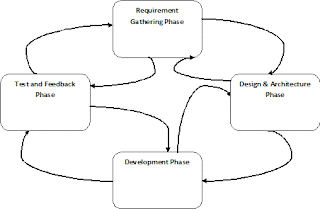
The agile methods are a set of practices created with the aid of experienced software developers. The agile methods can be seen as a reaction to devise-driven methods that emphasize massive making plans and documentation with strict strategies, and have a view that specifiable and predictable answers to issues exist. In contrast to plan-driven techniques, Agile Manifesto highlights the following: individuals and interactions over strategies and tools, working software program over comprehensive documentation, patron collaboration over agreement negotiation and responding to a alternate over following a plan. despite the fact that the manifesto highlights the values of the gadgets on the left extra than the ones at the proper, it does not abandon those on the right either. the main differences between the plan-driven and the agile development paradigms are illustrated in Figure1. In plan-driven improvement, there are consequent levels which are usually dealt with via phase-specific groups. records among the levels is transferred the usage of giant documentation. In agile methodologies, the improvement is completed in incremental iterations in incorporated groups. necessities for the advanced gadget are stored inside the product backlog.
Besides the manifesto, there is no single and exact definition of agile, but rather there are various methods that share the same philosophy which call themselves agile. Most methods have iterations with continuous refinement of plans and goals. However, each method has its own practices and terminology, putting emphasis on different issues in software development, and hence can be adopted to suite for different situations.
For example, XP is a set of pragmatic practices that emphasize extensive testing, code revise and pair programming, whereas Scrum is a development framework that focuses on management issues in projects where planning is difficult. The core of Scrum is in frequent feedback loops and Sprints that take place in daily stand-up meetings and with monthly (or more frequent) planning meetings. Another popularity-gaining methodology, Kanban, differs from the previous as only having few practices and promoting gradual change and a constant flow over timeboxed iterations.
In this paper, the methodological analysis is based on the division between the plan-driven and the agile paradigms. It has been argued that other methodological paradigms also exist. For example, open source development has been seen as a distinguished development approach. On the other hand, the open source development can be seen as one of the many development domains where agile methods can be successfully applied.
Comments
Post a Comment